
Sioux Falls Bat Season: When Bats Move Into Homes and How Exclusion Prevents Repeat Infestations
Every spring, Sioux Falls bats wake up from hibernation and start looking for one thing: your attic. Knowing when they move and when you're legally allowed to act is the difference between a one-time visit and a colony that returns every single year.
What Sioux Falls Homeowners Need to Know
- Bat season in South Dakota runs from spring through fall, with a legally protected maternity period from June 1 through mid-August, during which exclusion is not permitted.
- Exclusion is the only permanent solution — killing or trapping bats is illegal and doesn't prevent re-entry. Timing the exclusion correctly is everything.
- The prime action window is mid-August through mid-October. Miss it, and you may be sharing your walls with a colony all winter.
A bat darting through your living room at dusk or scratching sounds coming from the attic at night aren't random — they're predictable signals tied to bat season in South Dakota. For Sioux Falls homeowners, the bigger risk isn't the initial encounter. It's acting at the wrong time, missing the legal exclusion window, and watching a small problem grow into a full colony over the next season or two.
At Olson's Pest Technicians, we've been helping Upper Midwest homeowners navigate bat season since 1966. Here's what you need to know about when bats move, why they keep coming back, and how to stop the cycle for good.
Quick Answer: When Is Bat Season in Sioux Falls?
Bat season in Sioux Falls runs from April through October. Female bats form maternity colonies in attics from June through mid-August — a period when exclusion is illegal. The safest, most effective window for professional bat exclusion is mid-August through mid-October, before bats select a winter hibernation site. If bats are already hibernating in your home between November and March, exclusion must wait until spring.
Why Bats Keep Coming Back to the Same Home
The two species most commonly found inside Sioux Falls homes — the big brown bat and the little brown bat — are colonial roosters with strong site loyalty. When a female finds a warm, dark entry point in your home, she remembers it. She returns the following season and brings others with her. A colony of 10–15 bats can double or triple in size over just two or three seasons if the access points are never permanently sealed.
The health stakes are real, too. Bat guano contains a fungus linked to histoplasmosis, a lung infection caused by disturbed airborne spores. According to the Centers for Disease Control and Prevention, bats account for approximately 70% of human rabies deaths in the United States — often because bat bites are too small to notice (CDC, "Bats Lead in U.S. Rabies Risk"). Any direct contact with a bat warrants medical evaluation. If you've noticed recent activity, our guide on what to do about a bat infestation on your Sioux Falls property is a good starting point.
The Sioux Falls Bat Season Timeline
Bat activity in South Dakota follows a consistent pattern each year, and knowing which phase you're in determines what you can legally and safely do about it.
Spring Emergence: April – May
As temperatures rise in April, bats wake from hibernation and begin scouting roost sites. Females are looking for warm, sheltered spaces to raise pups — and attic spaces in Sioux Falls homes, which can reach 80°F to 100°F in summer, fit that profile well. Bats flying around your roofline at dusk during this period may be actively prospecting your home. This is actually the best window for a proactive inspection, since entry points can still be addressed before June 1 maternity season begins.
Maternity Season — No Exclusion Allowed: June 1 – August 15
From June through mid-August, female bats are giving birth and raising pups that can't yet fly. This is a legally protected period. Performing exclusion during maternity season means flightless pups get trapped inside your walls, where they'll die, decompose, and potentially push into your living space searching for an exit. If you discover bats during this window, document the activity, note the entry points from a safe distance, and contact a professional to schedule exclusion for mid-August or later. Our overview of humane exclusion strategies for bats and other wildlife explains why timing and technique go hand in hand.
The Prime Exclusion Window: Mid-August – Mid-October
Once pups can fly — typically by mid-August — the maternity colony breaks up. This is the golden window for bat exclusion in South Dakota. Bats are still active nightly (confirming full exit is straightforward), and they haven't yet selected a winter hibernation site. Our technicians begin with a thorough inspection to identify every entry point, including gaps as small as ¼ inch. Bat cones or exclusion gates are installed at primary entry points, allowing bats to exit but not return. Once all bats have cleared out, every opening is permanently sealed, and a full guano cleanout is completed. Our exclusion work is backed by a one-year guarantee.
Fall Through Winter: October – March
By October, bats are feeding heavily to build fat reserves before hibernation. Big brown bats in South Dakota frequently overwinter inside structures — wall cavities and attic spaces often maintain the 35°F to 40°F temperatures they need. Homeowners who miss the mid-August to mid-October window are generally looking at a wait-and-plan situation until spring. Disturbing hibernating bats in winter can drive individual bats into your living space, compounding the problem. For more on what that looks like, see our post on what happens to bats in Sioux Falls in the winter.
Simple Steps to Reduce Bat Risk Before the Season Starts
Prevention is significantly easier and less costly than dealing with an established colony. A few targeted actions each spring go a long way:
- Schedule an early spring inspection. Getting a professional look in April or early May, before June 1, gives you the most flexibility to act.
- Check ridge vents and soffit gaps. These are the most common entry points for bats in Sioux Falls homes. Damaged or poorly fitted venting is a frequent culprit.
- Install chimney caps and attic vent screens. Inexpensive additions that close off some of the most accessible entry points that bats exploit.
- Don't disturb an active roost mid-season. If bats are already present between June and August, contact a professional to plan exclusion for the correct window rather than attempting intervention yourself.
Signs It's Time to Call a Bat Control Professional
If a bat is found inside your living space, particularly a bedroom, contact animal control and your local public health department before releasing or discarding it. The CDC advises that any possible contact with a bat, even when a bite isn't clearly visible, warrants medical evaluation (CDC, "Preventing Rabies from Bats").
For property-level concerns, reach out to a professional if you notice any of these:
- Guano accumulations in the attic or along exterior walls
- Dark grease or rub marks around the roofline gaps, indicating repeated bat entry
- A persistent ammonia-like odor from the attic
- Scratching, flapping, or chittering sounds at night between April and October
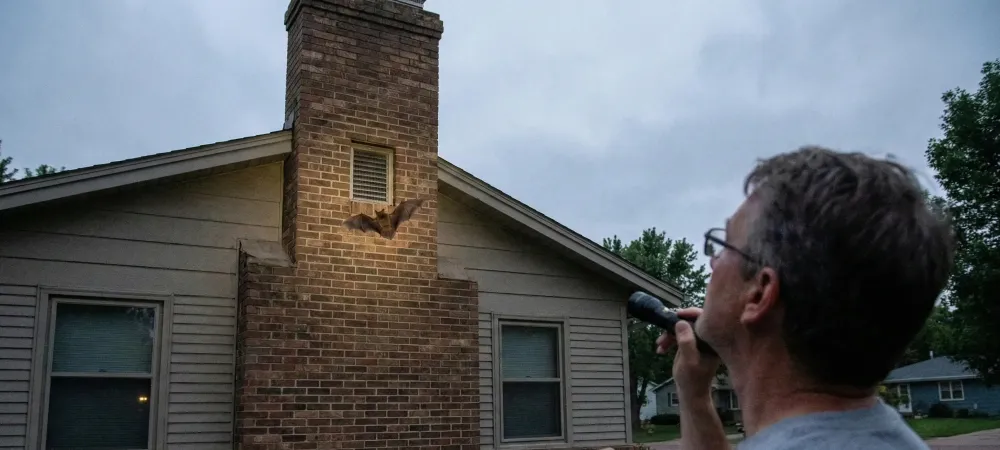
- Multiple bats exiting the same roofline point at dusk
In our experience, homeowners who call at first notice avoid the compounding costs of guano damage, structural repair, and larger colony removal the following year. Olson's Pest Technicians's bat control and exclusion services cover the full scope — inspection, exclusion devices, permanent sealing, guano cleanout, and our one-year guarantee — across Sioux Falls and the surrounding South Dakota communities we serve.
The prime exclusion window in Sioux Falls runs mid-August through mid-October. If you're seeing signs of bat activity, the time to act is before that window closes; not after bats have settled in for the winter.
Schedule your free bat inspection today or call us.
Sources
- Centers for Disease Control and Prevention. "Preventing Rabies from Bats." CDC.gov, 1 July 2025, https://www.cdc.gov/rabies/prevention/bats.html.
- Centers for Disease Control and Prevention. "Bats Lead in U.S. Rabies Risk." CDC Online Newsroom, 11 June 2019, https://archive.cdc.gov/www_cdc_gov/media/releases/2019/p0611-bats-rabies.html.
- Centers for Disease Control and Prevention. "Rabies in the United States: Protecting Public Health." CDC.gov, 2025, https://www.cdc.gov/rabies/php/protecting-public-health/index.html.